
Previous Residents Of A Windsor Address
Land records and household records work best together. Weld's EagleWeb indexes deeds back to January 1, 1865. Larimer's current Easy Access page covers 1971 to the present. But an older guide points to an earlier cutoff. The Windsor Beacon, Greeley directories, census indexes, Lakeview Cemetery, local histories, and the county genealogy societies cover other Windsor eras. No single record names every past resident of a Windsor address.
| Source | Years it covers | Where held | What it shows |
|---|---|---|---|
| Windsor Weld recorded-document index | Jan. 1, 1865-present | Windsor EagleWeb and Clerk | Windsor grantor, grantee, type, reception, date |
| Windsor Larimer recorded-document index | Current page 1971-present; older guide says 1939-present | Windsor Landmark Web and office books | Windsor deed index and image route |
| Windsor Larimer land-transfer index | 1862-1872 | Larimer Genealogical Society | Early Windsor land-transfer names |
| Windsor Greeley directory examples | 1871, 1892, 1903, 1904-05, 1912 | WCMI, UNC, Greeley research center | Regional Windsor name and address clues |
| Windsor Beacon | 1908-09; 1935-Jun 1973; May 1977-Apr 1982 | Clearview Library | Windsor notices, obituaries, social and business references |
| Windsor census material | 1866, 1870, 1880, 1885, 1900, 1910, 1920, 1930, 1950 | WCGS, LCGS, libraries, NARA routes | Enumeration household and geography clues |
| Windsor Lakeview Cemetery | Late 1800s through at least Sep 2009 supplemental data | Town, Cemify, WCGS | Windsor interment names and dates |
| Windsor assessor tax roll | Current tax-year data | Larimer or Weld assessor | Owner, mailing, situs, values |
Think of the table as a layered Windsor toolkit. Deeds show who transferred the land. A street directory or residents directory suggests a household at publication time. Newspapers and cemetery records can close out a life or reveal a move. The assessor anchors the current tax roll. Each layer covers a different slice of Windsor.
Windsor Parcel Card First
Find the current Windsor address first. Use WING, the Larimer Land Information Locator, Weld GIS, or the matching Windsor assessor. Note the county before touching a recorder. From the parcel card, copy the Windsor parcel or account number and the situs address. Also copy the owner mailing address, subdivision, block, lot, section-township-range, short legal description, and tax year. A full Windsor property report may add more. It can include document history, buildings, valuation, taxing authorities, a photo, a sketch, and a map.
These fields guard against a classic Windsor mistake. That mistake is reading an owner mailing line as the physical home. One Windsor parcel can list a trust as a record party. It may instead show an estate, a corporation, a lender, or a person. A historic street name may still resolve to a current lot through the legal description. Save the report date, because Windsor tax records change.
Find The Windsor Purchase Deed
Search the recorder's index with the current Windsor owner as grantee. In Larimer, Landmark Web searches by name, legal description, document number, book and page, consideration, record date, and reception number. Quick-search modes speed the lookup. In Weld, EagleWeb breaks out grantor, grantee, document type, reception number, and record date. If a Windsor street spelling or postal city fights you, search the legal description instead.
The recorded row should yield a reception number, recording date, document type, grantor, grantee, and the legal-description trail. Several instruments can sit in the chain without marking any household move. These include a deed of trust, special warranty deed, quitclaim, lender transfer, or personal-representative deed. Follow the actual parties on the document. Open the image when the index alone falls short. The Larimer Landmark Web index appears on the official recorder page for Windsor address-history work.
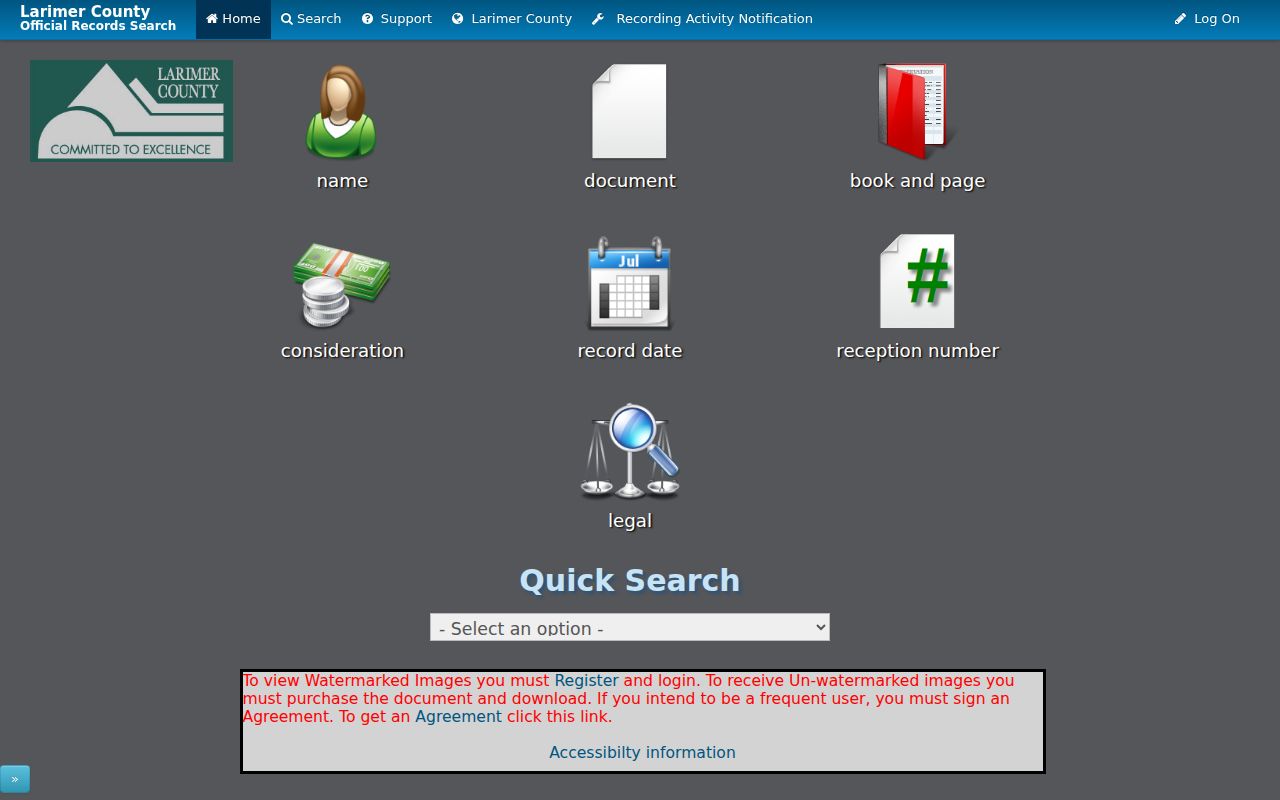
Anyone can browse the Windsor index data anonymously. Images and downloads follow the account and payment route the Windsor county describes.
Walk Backward Through Grantors
The search runs as a loop. Take the current Windsor grantee. Find the earlier grantor, then treat that grantor as the next grantee. Repeat. The legal description and reception number keep the chain tied to the same Windsor land. Names shift, but the parcel stays fixed. Trust, estate, lender, and entity transfers deserve a close read. A grantor can be a record role rather than a person who lived there.
- Search the current owner or grantee in the correct Windsor county recorder.
- Save the Windsor deed type, reception number, date, grantor, grantee, sale information, and legal-description variants.
- Search the seller as an earlier grantee and repeat with the same lot, block, subdivision, or section key.
- When the online index stops, ask the office for an in-person book search or records request.
- Pair each deed period with a directory, census, newspaper, cemetery, obituary, probate, or permit clue.
- Grantor
- The party transferring or conveying an interest in a recorded instrument.
- Grantee
- The party receiving an interest in that instrument.
- Windsor chain of title
- A sequence of recorded transfers for land. It is not a continuous list of people who occupied the address.
- Legal description
- The recorded land identifier used to connect a deed to a parcel, plat, lot, or section.
Windsor Online Deed Cutoffs
The county split makes the numbers matter for Windsor. Weld's EagleWeb index and maps reach back to January 1, 1865. Larimer's current Easy Access page offers online indexing from 1971. It routes earlier work to office books. An older Larimer guide lists 1939 as the start. It describes a book route for anything before. The current public page controls. Still, confirm 970-498-7860 before promising an earlier Windsor date.
A cutoff is not a destruction date. Older Windsor deeds may live on in books, microfilm, office files, State Archives, or county genealogy indexes. When you ask, bring the county, legal description, book or page, reception number, and date window. The index may be free, but images can cost money. Cite the row. Order the Windsor copy only when you truly need it.
Those numbers set the starting depth of a Windsor previous-residents search. They never remove the need for a human fallback at the records office.
Past Households In Directory Years
The historical household layer draws on the Windsor Beacon and regional city directories. It also includes WCMI, census indexes, obituaries, cemetery material, and local histories. WCMI lists regional directory examples from 1871, 1892, 1903, 1904-1905, and 1912. Clearview's Beacon runs cover 1908-1909, 1935 through June 1973, and May 1977 through April 1982. No continuous Windsor criss-cross run appears online.
Same-name Windsor residents separate by street section, source code, spouse, occupation, initial, or address wording. Pair each directory year with the closest census year and deed period. A historical source may name only the householder or a business contact. It may not name the whole Windsor household. The Windsor city directory collections page walks through each shelf.
Note: A directory entry places a household at one date, and a deed shows ownership at another.
Windsor Obituary And Cemetery Endpoints
Obituaries and cemetery records often close the trail for past residents of Windsor. Clearview's Windsor Beacon can supply the notice, survivors, church, organization, and former address. It also notes the date of death. Lakeview Cemetery adds a Town-linked burial lookup, a map, rules, fees, and a Clerk fallback. WCMI points to still more cemetery data, funeral-home ledger transcriptions, and Windsor Beacon obituary files.
Treat an interment as one record. It proves a burial, not a lifetime of residence. A funeral ledger may name a date or a place. The full file stays closed. The fix is pairing. A marriage index, probate file, deed, or city directory will hold the name steady. So will a census entry. For heirs, remember that a probate file or a personal-representative deed sits with the serving district court or the recorder. Access limits can apply.
Windsor Sanborn Map Context
The Library of Congress Sanborn guide explains what fire-insurance maps can show. Streets, lot and block numbers, building use, and construction appear on the sheets. Water mains, hydrants, and structure outlines appear there too. The catalog holds nearby Colorado items. Greeley maps date to June 1886 and October 1909. A Fort Collins map covers June 1886. No Windsor, Colorado Sanborn sheet appears in the official search. Results can mix Windsor places in other states.
Use nearby maps as regional context only. Confirm county and state before citing any Windsor sheet. A map can explain a street, a lot, or a building form. It cannot name every former resident. The name trail still runs through a plat, a deed, and a street directory. The newspapers carry it as well.
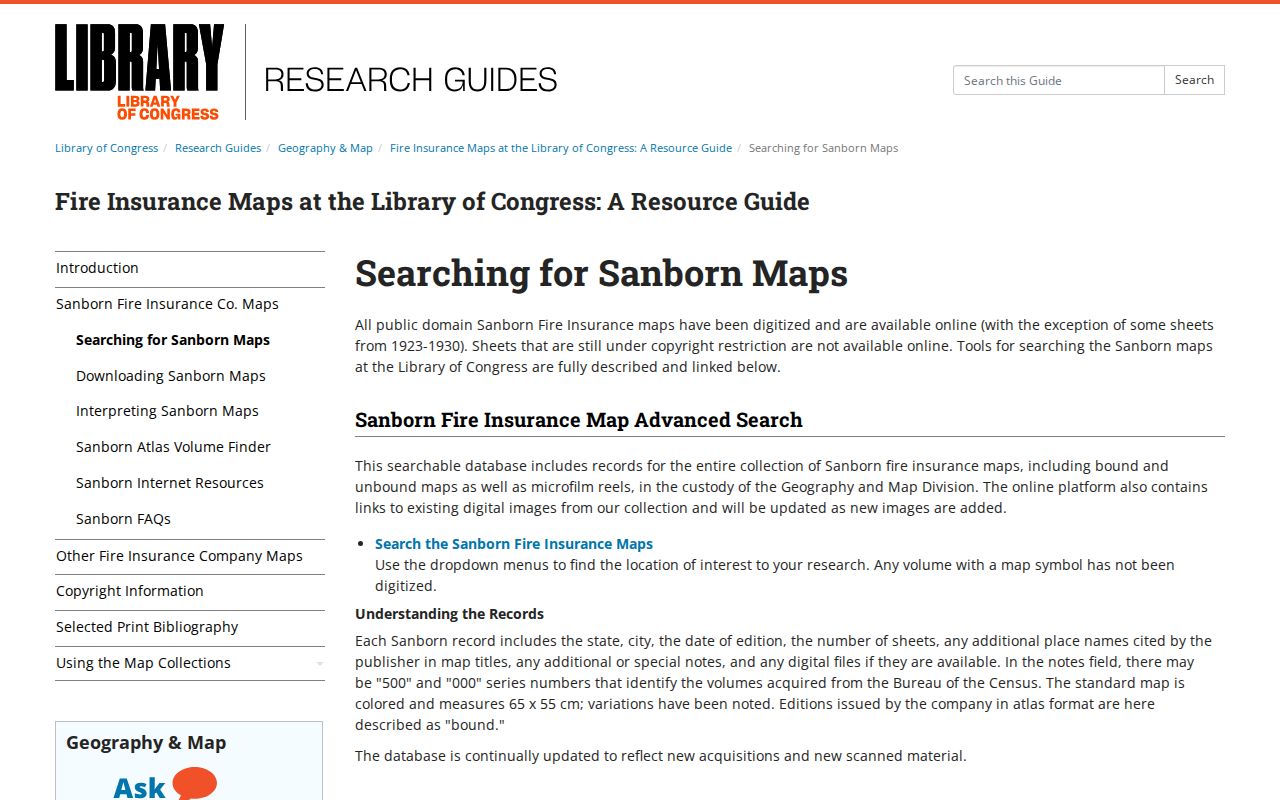
The guide is a method source. Read it as a way to search Sanborn maps, not as proof that a Windsor sheet exists.
Bridge Windsor Address Changes
Windsor publishes no authoritative street-renumbering or renaming schedule. The safer bridge is to test old and new spellings together. Subdivision and lot, section-township-range, and the Windsor parcel all anchor an address. The legal description and the county do too. Rural roads, town streets, and annexation edges can confuse an address. Postal-city strings can make one place look like several Windsor addresses.
Permits and public-hearing packets can date a Windsor structure or a development project. The Town Community Core permit route requires an account. It advertises no anonymous full historic index. A narrow CORA request can still ask for a Windsor address-specific permit record. It can also ask for code, planning, or hearing records. When those doors close, the fallback chain holds. That chain runs through the Town, county offices, Clearview, WCMI, LCGS, UNC, and the State Archives.
Lawful Windsor House History
House-history research works best when every step stays tied to a Windsor parcel, a date, and a source. Do not publish private contact details. Skip full birth dates, protected addresses, and unverified guesses about who lived at a Windsor home. A past owner can be an entity or an estate. A past household can include people no public record ever named.
Lawful use. Use previous-resident records for family history, property history, civic research, and lawful reconnecting. Do not use a Windsor address or name trail to stalk, harass, intimidate, threaten, or harm anyone.
The Larimer Recording Activity Notification can watch personal, business, or trust names within Larimer County. It is a free alert. It is not a fraud-prevention guarantee. It does not cover the Weld side of Windsor. The county's own notification page shows the useful contrast between a deed-chain search and a dated alert.
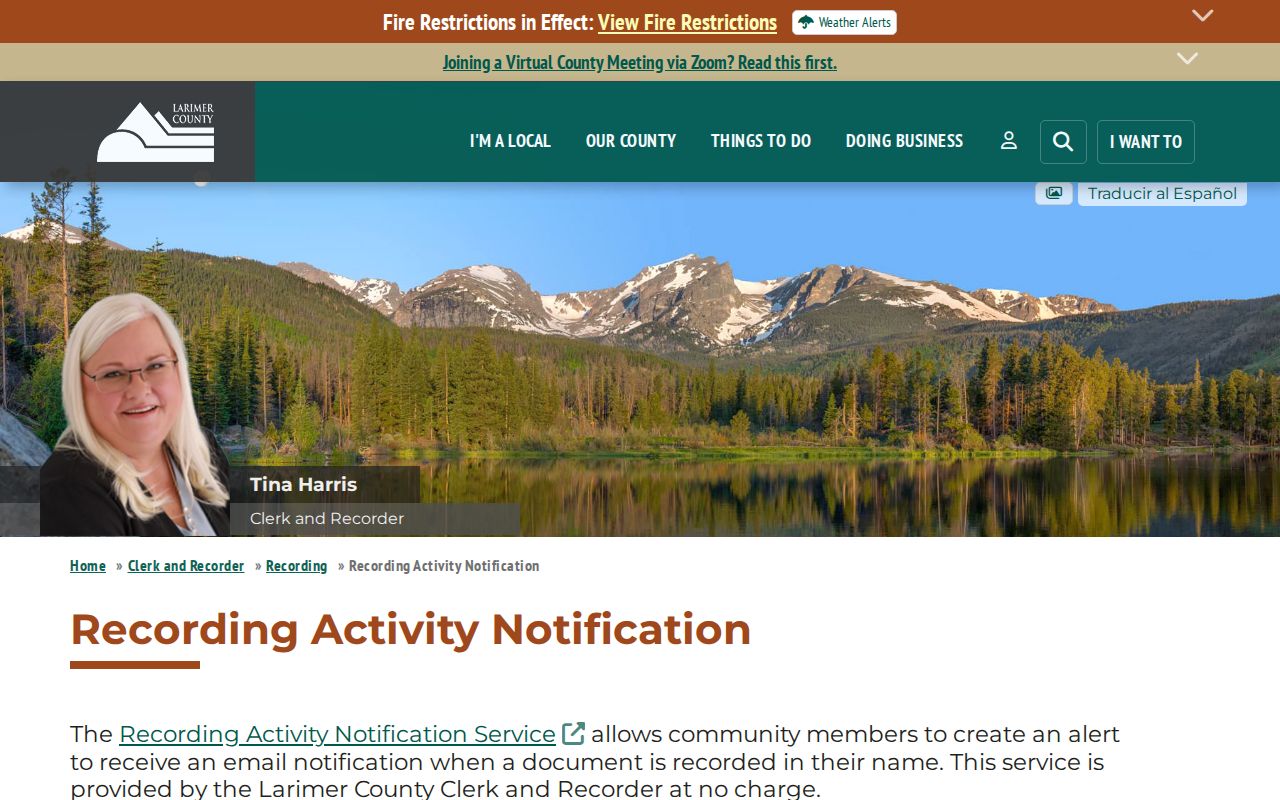
Always confirm a notice or deed in the official recorder index. Keep coverage dates attached to the county. Larimer's current recording page advertises online indexing from 1971 to the present. An older county guide describes an earlier 1939 starting point. It sends older searches to the office books. Weld's EagleWeb index reaches back to January 1, 1865. For Larimer questions, the practical fallback is the Fort Collins office. That office sits at 200 West Oak Street, 970-498-7860, and recording@larimer.gov. For Weld, use 1250 H Street in Greeley, 970-304-6530, or CRStaff@co.weld.co.us.